

ARTIST-DEDICATED MUSEUMS IN SOUTHWESTERN FRANCE
In the last post, I talked about some of the wonderful museums dedicated to particular artists in and around the Riviera, that we know well and which are an essential part of our travels to that part of the country. Some are enormous, and need many hours to fully enjoy, while others are smaller in scale but are representative of an artist’s life and artistic output. Heading in a westerly direction from the Riviera into Southwestern France, there are so many great art museums, some of which were the former home of a specific artist, they came from that town or spent a considerable period of their lives there. All are well worthwhile visiting, may be holding a special exhibition, and will surely enhance an exploration of that region.
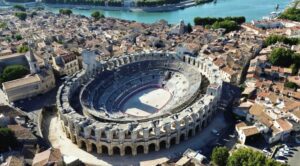
When we think of Arles, aside from the wonderful Roman remains, such as the enormous arena, one of the first things that often springs to mind is the town’s association with Vincent Van Gogh. He had such a lasting impact on the town, although he only lived there for about 15 months, from February 1888, until he left for a mental institution in Saint-Remy-de-Provence in May 1889. Although he suffered from severe mental health issues during his time in Arles, it was, nevertheless, a highly productive time for him, producing over 300 works, focussing on the landscape, flowers and local people as subjects.
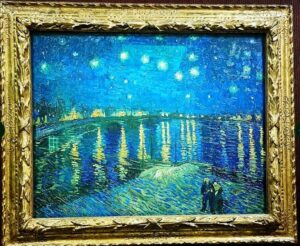
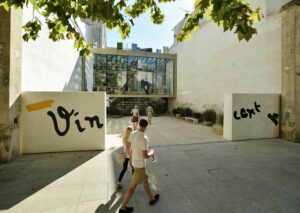
Although the Fondation Vincent Van Gogh in Arles does not own any works by the artist, they hold regular exhibitions of his work on loan from other galleries, so it’s well worthwhile paying a visit. To see a large collection of his work, you need to head to either the Quai d’Orsay in Paris, or the Van Gogh Museum in Amsterdam. However, the mere fact of being in Arles, you experience something of Van Gogh’s genius that cannot be fully appreciated anywhere else.
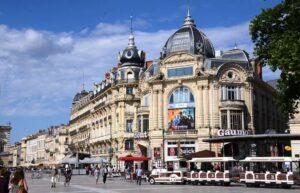
About 81 kms west of Arles, less than 1 hr. by direct train, lies sunny Montpellier, one of the largest towns in the Occitania region. It’s famous for its historic medical university, the oldest in Europe.
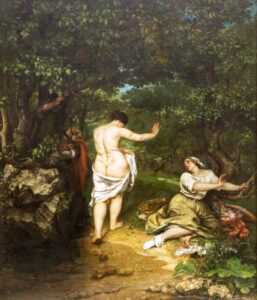
It’s a youthful student city with a vibrant mix of medieval history and outstanding avant-garde architecture, narrow medieval streets, a 14th century Gothic cathedral, the Belle Epoque Opera Comédie—one of the most famous theatres in France, built in 1785–and in particular, the Musée Fabre, which has an enormous collection of French paintings, and especially 15 works by Gustave Courbet, who led the Realism movement in the 19th century, as well as Impressionist painter Frédéric Bazille who came from Montpellier.
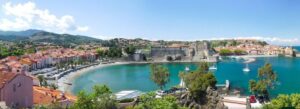
Down the Mediterranean coast from Montpellier, about 30 kms from the border with Spain lies Perpignan, nestled between the Pyrenees and the sea. As the former capital of the Kingdom of Majorca, the town has a vibrant Catalan culture where a sizeable percentage of the population speak Catalan. It has an extensive medieval quarter, many lovely squares with terrace cafes, and good shopping.
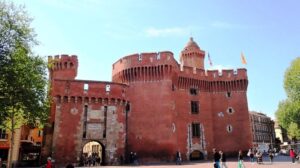
Perpignan’s remarkable landmarks include the Palace of the Kings of Majorca, the iconic Castillet, a distinctive red-brick fortress built in 1368, which now houses the Casa Pairal museum. It celebrates Catalan arts and traditions, and the Hotel Pams, an Art Nouveau architectural masterpiece—try and see the stunning onyx staircase, leading to Art Nouveau galleries.
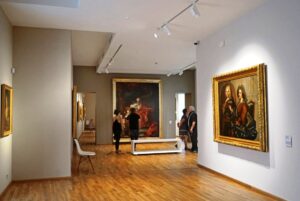
Another treasure of Perpignan lies in the heart of town, in rue Mailly, the Hyacinthe Rigaud art museum, housed in two mansions in the historic centre. Hyacinthe Rigaud was born in Perpignan in 1659 and became the portraitist of Louis XIV and the royal family. The museum has a number of Rigaud’s works, along with works by Violet, Maillol, Dufy and Picasso. The museum offers rich overview of the history of art in Perpignan from the 15th to the 20th century, and also hosts regular temporary exhibitions featuring famous artists who had a connection with the town.
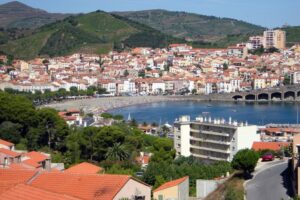
If you head south right down to the coast, just half an hour by train or car from Perpignan, you’ll arrive at the seaside resort town of Banyuls-sur-Mer, in a beautiful location on the Côte Vermeille. There are lovely beaches, and behind the town is a typical vineyard landscape that produces the renowned Collioure and Côte Vermeille wines—the vineyards stretch for many kilometres, regularly descend down to the Mediterranean, and offer the visitor beautiful panoramas of the whole area.
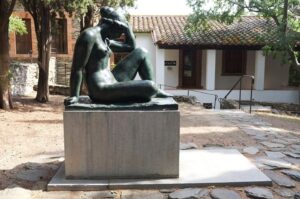
Banyuls was the birthplace of the internationally renowned sculptor Aristide Maillol. You can admire a number of his works around the town and visit the Musée Aristide Maillol just a little way out of the town, along the Route de Las Escoumes in the middle of the vineyards, shaded by cypresses, olive trees and fig trees. The sculptor spent his winters here, and his grave is located in the garden, under a bronze cast of his sculpture ‘Méditerranée’. The museum presents numerous works by Maillot including 36 bronze and terracotta sculptures, plus ceramics, paintings and lithographs, as well as items reflecting his daily life. Temporary exhibitions, devoted to the art of the 20th and 21st centuries, are held here throughout the year.
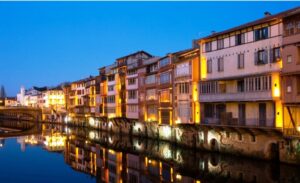
Our next destination is the town of Castres, which means heading back up the coast, past Perpignan and turning inland just south of Narbonne, through Carcassonne and north west to Castres. All up, around 217 kms., 2hrs 40 mins. by car and about the same by train, but requires a change of trains at Toulouse.
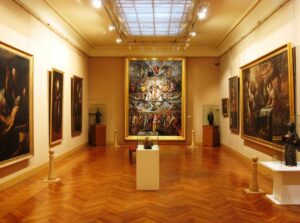
The attraction in Castres for us is the Musee Goya. Located on the banks of the Agout River, on the site of a former Benedictine Abbey, the building, which now houses the Goya Museum is a former episcopal palace built in the 17th century. The museum started out with a focus on Spanish art, and still has a sizeable collection, which includes such masters as Velázquez and Murillo, and is now the second largest in France after the Louvre. In 1947, the Castres museum was renamed the “Goya Museum” after a bequest that included a number of Goyas. The museum was closed for 3 years for a massive renovation and extension, reopening in 2023 with new, elegant and airy displays, plus new works including some contemporary artworks.
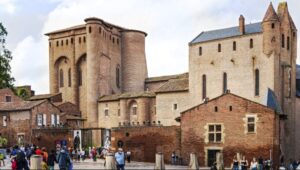
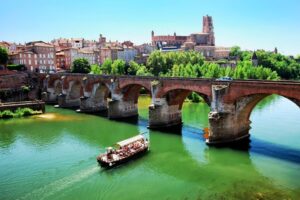
41 kms north of Castres lies the charming city of Albi. In 2010 it was inscribed as a UNESCO World Heritage Site, in recognition of its unique, well-preserved medieval brick ensemble, specifically the massive, awe-inspiring Saint-Cecile Cathedral, the Palais de la Berbie—the former bishops’ palace, adjacent to the cathedral—and surrounding historic neighbourhoods. The city serves as a prime example of a fortified, southern French Gothic style that evolved in the 13th century.
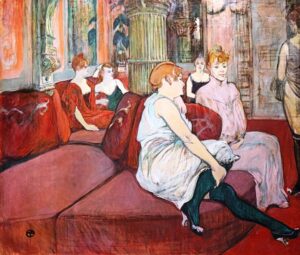
One big attraction in Albi is of course the Musée Toulouse-Lautrec, which occupies the Palais de la Berbie. Most of us associate Toulouse-Lautrec with Paris, given his huge output of works with a Parisian theme, such as his famous posters for the Moulin Rouge and works featuring Parisian bohemian life. In fact, he was born in Albi, and this museum holds the most extensive collection of his vibrant, sparkling output, with over 1,000 works. These include his earliest work, from his childhood in the Albi countryside to his last days on his mother’s estate near Bordeaux. This museum is a must for any art lover.
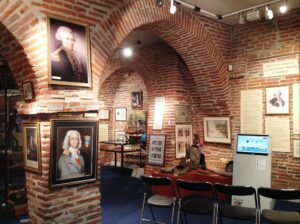
For Australians, Albi has another attraction, the Musée Laperouse, which is in the same complex as the Mercure Hotel. Strolling through the exhibition is a reminder of old history lessons at school, with model ships and memorabilia of the voyages of Captain Cook’s rival in the exploration of the Pacific.
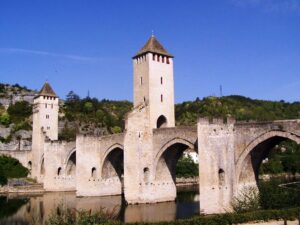
Heading north from Albi, after 116 kms you will reach Cahors, or it’s less than 90 mins. by train from Toulouse. The town was a Celtic settlement who were among the last Celtric tribes to resist the Roman invasion. However, Romanisation was rapid and profound. It became a large Roman city, with many monuments whose remnants can be seen today. It declined during the Middle Ages and lost its university in the 18th century. These days, it’s a popular tourist centre, with visitors coming to enjoy its medieval quarter, the famous 14th century fortified Valentré bridge, vibrant cultural life and its Malbec wines, foie gras and truffles.
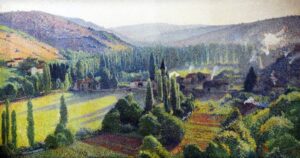
In the former Bishop’s palace is the Henri Martin Museum. Dedicated to the celebrated post-Impressionist painter, born in Toulouse in 1860, Martin loved the Lot countryside and bought the Domaine de Marquayrol in 1900, 23 kms from Cahors where he spent 5 months every summer painting local scenes. Although pride of place goes to Martin’s works, the museum also includes archaeological finds and work by other artists from the Quercy region.
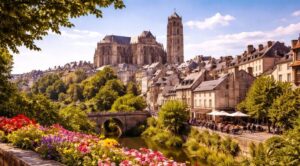
111 kms east of Cahors lies Rodez, in the Aveyron department of Occitania. It has excellent transport links to the rest of the country by road and rail and an airport connects it to a number of destinations across Europe. Rodez is often referred to as “the land of art and history” and one of the best ways of exploring the city is to follow the circular route around the historic centre, and especially the Gothic Rodez Cathedral.
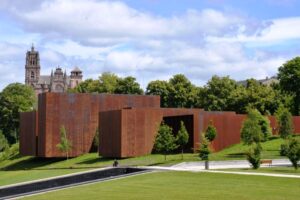
Unmissable is one of the town’s most outstanding attractions, the Soulages Museum, displaying the works of the artist Pierre Soulages who was born in Rodez in 1919. The museum itself is a remarkable architectural achievement, which was awarded the prestigious Prix Pritzker in 2017.
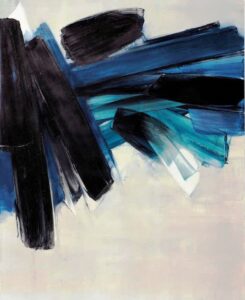
Pierre Soulages in the Soulages Museum, Rodez
The collection of Soulages work includes works from his youth, paintings on paper and oil paintings on canvas, etchings, lithographs and screen prints. Fulfilling the wishes of the artist, the museum also holds regular temporary exhibitions of other artists, which have included Picasso, Soto, Calder and Yves Klein, and contemporary artists.
Photo, Shutterstock
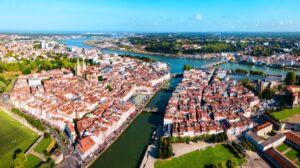
Right across on the Atlantic coast lies Bayonne, almost 450 kms from Rodez. I have included it here, since it has a very important art museum, the Musée Bonnat-Helleu.
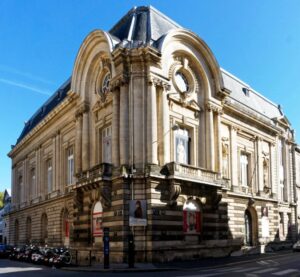
Described by a former Director of the Louvre as “the finest collection between Paris and Madrid”, this museum houses many works of Bayonne-born Léon Bonnat, regarded as one of the most important French painters of the late 19th century. His ‘Resurrection of Lazarus’ won him second prize at the Prix de Rome in 1857. He is chiefly known for his large scale religious and decorative compositions, as well as his Italian and Orientalist genre scenes. He won critical and popular acclaim for his portraits, and became a teacher and then director of the Ecole des Beaux-Arts in Paris. He was also a renowned art collector, and during his lifetime, amassed a sumptuous collection of drawings by Michelangelo, Raphael and Rembrandt, as well as paintings and bronzes.
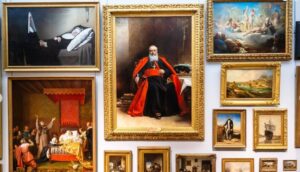
In 1891, Léon Bonnat bequeathed a major part of his work to Bayonne, including a collection of 1,800 drawings spanning a period from Antiquity to the 19th century. Other friends followed his lead, bequeathing more contemporary works, especially from the Impressionist movement. A building was constructed in 1896 and inaugurated in 1901 to house this growing collection, including works by Rubens, Tiepolo, Van Dyck, El Greco, Constable, Turner, Goya, Ingres, Delacroix, Géricault, Boudin, Corot, Degas, Bonnat, and 118 works by Paul Helleu. Today, the museum presents a remarkable collection of paintings, 3,500 works on paper, sculptures, objects d’art and archaeological finds. The collection now numbers around 7,000 works, thanks to acquisitions by the city of Bayonne, major gifts and bequests. The museum reopened in Nov. 2025 after closing for a couple of years to restructure and extend the building, doubling its surface area at a cost of €35 million.
As we’ve seen from this exploration of some museums in the southwest of France that are dedicated to individual artists, they can become a wonderful focus of a trip to a region perhaps hitherto unexplored. Unexpected delights are waiting to be discovered, and every region tells its own story through its treasured collections. It’s true to say that every region of this country is home to artistic gems not to be missed.
Leave a Reply