

‘HERE’S LOOKING AT YOU, CASABLANCA’ – RICH ART DECO ARCHITECTURE AND THAT FILM
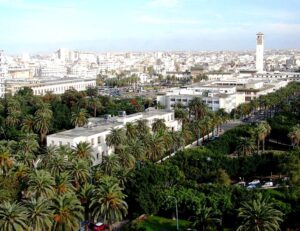
We arrived at Casablanca via a fast train—identical to a French TGV or the Spanish AVEs—from Tangier. The journey took just on 2 hours, and was on time to the second. Casablanca is the economic and business capital of Morocco, with around 3.5 million people in the urban area alone, with skyscrapers, traffic, noise, alongside a traditional medina. Known as the “white city”, named for the whitewashed Moorish buildings that scatter out from the coast, now blended with French colonial architecture. This is where young Moroccans come to set up business, advance their careers, and where international restaurants offer a break from traditional cuisine.
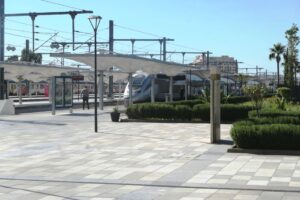
Casablanca is often at the start or end of visitors’ itineraries in Morocco, thanks to a major international airport and good rail connections. On journeys of around a week to 14 days, Casablanca can also work as a mid-trip pause between inland and Atlantic coastal stops, but also between two more intensive sightseeing cities. For example, starting in Casablanca, it’s easy to take the train across to Marrakech for several days of immersive markets and traditional riads. Or another possibility is Casablanca-Rabat-Fez, visiting the coastal capital of Rabat before heading into the intensity of historic Fez. The Moroccan train network links each of these cities in roughly 1 to 4 hrs, on very straightforward journeys. Casablanca is also a good starting point for an Atlantic-focussed trip, combining it with Essaouria and Agadir down on the coast for some relaxing beach time.
As we discovered, Casablanca ia a very rewarding destination. One of its most outstanding features is its architecture. It is a city that shows off the stylistic innovations of their eras: Beaux Arts, Neo-Mauresque (Moorish Revival), Cubist, Brutalist and Post-Modern. When you walk along the city’s streets and boulevards, you are strolling through an open-air museum of 20th and 21st century architecture.
Before the 15th century the settlement, at what is now Casablanca, had been called Anfa, which scholars think is derived from the name of a branch of the Awraba tribe of the Maghreb. When the Alawi Sultan Mohammed ben Abdallah rebuilt the city after its destruction in an earthquake of 1755, it was renamed äd-Dar al-Bayda, which means ‘The White House’.
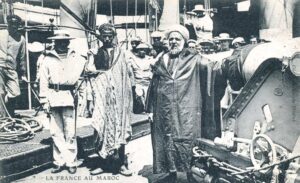
In the 19th century, Casablanca’s population began to grow—by the late 1880s, it reached around 10,000 people—as it became a major supplier of wool to the booming textile industry in Britain, and shipping traffic increased. It remained a modest-sized port until the arrival of French colonialists in 1906, and by 1921, the population had risen to 110,000, largely through the development of shanty towns.
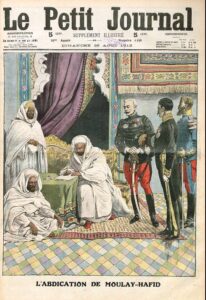
French control of Casablanca was formalised in March 1912, when the Treaty of Fez established the French Protectorat. The French decided to shift power to Morocco’s coastal areas, Rabat and Casablanca, at the expense of its interior areas, i.e., Fez and Marrakesh. Rabat was made the administrative capital of the country and Casablanca its economic capital.
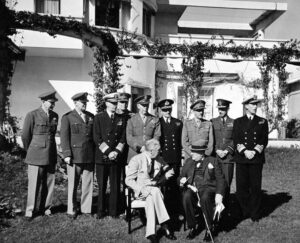
During WW2, French colonists in Morocco generally supported Pétain, while Moroccans tended to favour de Gaulle and the Allies. Invading American forces captured Casablanca from Vichy control when France surrendered on 11 November 1942, although the Naval Battle of Casablanca continued until American forces sank the German submarine U-173 on 16 November. Casablanca became the site of a large American air base, from where all American aircraft departed for the European theatre of WW2. This airfield has since become Mohammed V International Airport. Morocco gained independence from France in 1956.
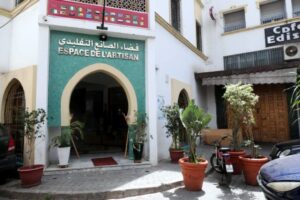
The oldest part of the city is the “Ancienne Medina”, so-called not for its antiquity—its oldest structures date only from the late 1700s—but because it foretells the modern future of the entire city. For example, it faces the sea. Its buildings don’t turn in on themselves by presenting solid walls to the street, but rather, large windows and balconies expose their interiors to the gaze of strangers. European traders and political figures, who began flocking to the city’s 19th century port, were displaying a new style of architecture. This appealed to wealthy Muslim and Jewish residents of the quarter, who set about building their own versions, but with Moorish details such as massive doorways and patios.
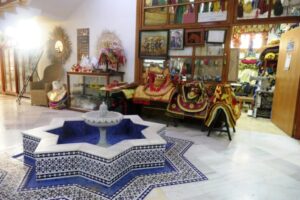
The medina is a great place for shopping for gifts and souvenirs, browsing and simply seeing how the locals live and go about their day. On the whole, the goods on sale are very much everyday items, as well as leather items, spices and clothing rather than high-end artisan crafts, although there are a couple of excellent exceptions. At around 50 hectares, the medina itself isn’t large by Moroccan standards.
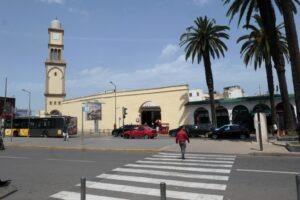
It’s surrounded by a 4 km wall with eight gates, and we’d suggest that a good entry is via the clock tower. This acts as a very useful landmark in the labyrinth of alleys, for when you become disoriented and lose your bearings—easy to do in this very crowded environment. The clock tower is tall, so it’s not hard to keep it in view as you wander its narrow, winding alleys. When considering a purchase, don’t forget to bargain—it’s obligatory!
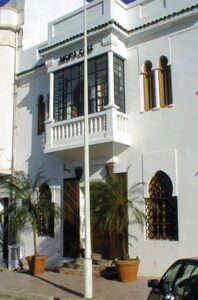
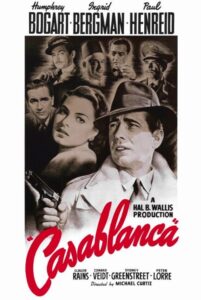
On the edge of the Ancienne Medina sits Rick’s Café. Yes, that Rick’s Café! It even has a piano player named “Sam” (actually Issam Chabaa), who does “play it again” a couple of times a night, along with favourites from the 1940s and ‘50s, including classic French, Spanish and Brazilian songs. It’s housed in a former mansion with a central courtyard built in 1930 against the walls of the medina.
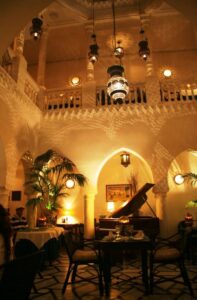
Opened on 01 March 2004, the space was designed to recreate the set of the fictional bar made famous by the movie made in 1942. As one commentator says, this restaurant “…is the copy of a place that never existed.”
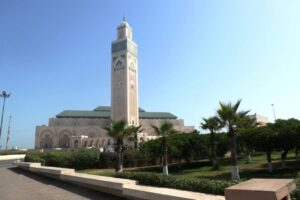
A pleasant stroll from the old medina along the scenic La Corniche (waterfront) will take you to the Hassan II Mosque—note that there’s a useful Tourist Information kiosk opposite the mosque. You will of course have seen this mosque from almost anywhere you happen to be in the city. Its prominent position, right out on the point overlooking the ocean, as well as having what is said to be the world’s tallest minaret, at 210m high—although some sources say it’s the second tallest—is a Must See for visitors. This is achievable, since it’s one of the rare Moroccan mosques open to non-Muslims.
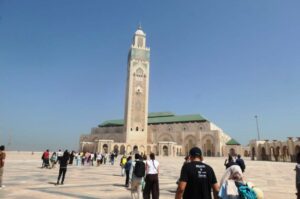
Since non-Muslims cannot enter independently, to see the interior of the Mosque you must join a guided tour, which we did. In fact, it was a most informative and enjoyable visit with a friendly guide who spoke perfect English (among other languages), and there were parties of French, German and Asian visitors doing exactly what we were doing. Tickets are priced at 140 dhs (dirhams), which equates to 14 Euros, and purchased at the ticket office on site. The duration of the tour is roughly one hour, but not at all rushed. Just avoid Fridays, for obvious reasons.
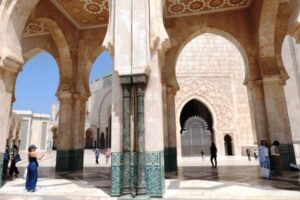
Completed in 1993, it was designed by a French architect under the guidance of King Hassan II, and built by Moroccan artisan craftsmen from all over the country. All building materials, both for the exterior and interior, were sourced from around Morocco. The walls are made of handcrafted marble, and the roof is retractable, illuminating the hall with sunlight during the day and enabling worshippers to pray under the stars at night.
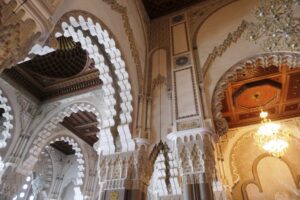
The interior is very beautiful, and an opportunity to visit shouldn’t be missed. You’ll see the exquisite Islamic geometric ceramic tilework, stone and marble floors and columns, sculpted plaster mouldings, and carved and painted wood ceilings, while the exterior surfaces display titanium, bronze and granite finishes, as well as surfaces decorated with pale blue marble and elaborate Zellij-style tilework.
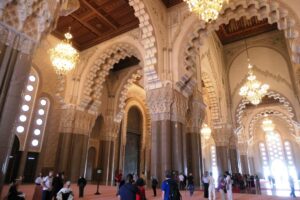
The Mosque can hold 105,000 worshippers: 25,000 for prayers inside the mosque and another 80,000 outside on the forecourt-plaza. The complex covers 9 hectares, and is built partially on land and partially over the ocean. Two large breakwaters were built to protect the mosque from the erosive action of ocean waves, which can reach heights of up to 10m.
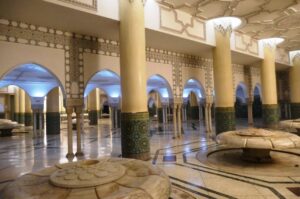
As well as the Mosque itself, there is a madrasa (Islamic school), hammams, a museum on Moroccan history, conference halls, and a huge library said to be the most comprehensive in the Islamic world.
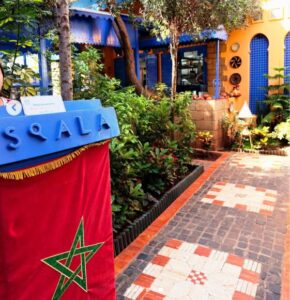
Walking from the Ancienne Medina towards the Mosque, you will see La Sqala, the remains of an 18th century seaside fortress. Nowadays, it mixes ramparts and cannons with a garden café and panoramic view over the sea.
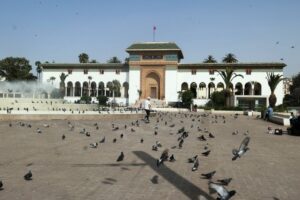
Back in the heart of the city, on Hassan II Avenue to the south of the Medina, you will come to the city’s main square, Square Mohammed V. Popularly known as “Place aux Pigeons”, which will become obvious when you get there, it had once been occupied by barracks of the French colonial forces.
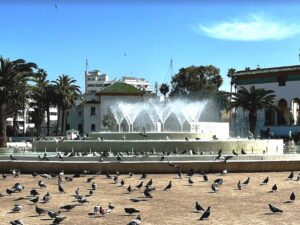
The square is dotted all around with palm trees, with a large central fountain built in 1976, known as the fontaine aux pigeons, it is the focal point of the city’s administration and economics.
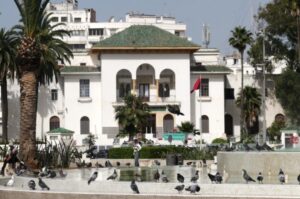
These buildings, erected in the 1920s and 1930s, influenced by both Hispano-Muslim and Art Deco architectural styles, include the Court House (1923), the Place d’Armes de Casablanca (1925), Bank Al-Maghrib, formerly the State Bank of Morocco’s Casablanca branch (1937), the Central Post Office (1920), Wilaya Building, formerly called City Hall (1937), and the French Consulate-General, the former Military Commander’s Mansion (1922).
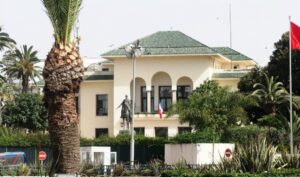
Ideal place for people-watching, the numerous delightful cafés make for perfect places to relax awhile and enjoy the ambience of the square, with its blend of tradition and modernity.
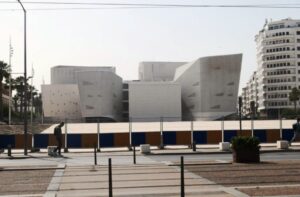
At the western end of the square is the striking, modern Grand Theatre of Casablanca, which has become something of the new icon of the area. Designed by French architect Christian de Portzamparc, winner of the Pritzker Architecture Prize in 1994, in collaboration with Moroccan architect Rachid Andaloussi. The building is made up of several pavilions reminiscent of an ancient medina. The 1,800 seat main hall is designed for musical concerts, classical theatre and various other large-scale performances. The whole complex was completed in 2019, but has still yet to have an official opening.
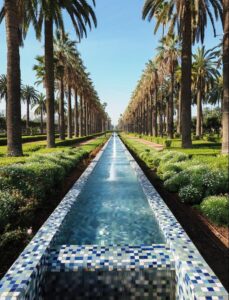
An oasis of peace in the heart of the city, the Arab League Park is described as its green lung, covering almost 30 hectares. It’s the largest park in the city and populated with a number of different species of trees and plants, as well as grassy areas, sports areas, playgrounds, and of course cafes. Its crossed by a small canal flanked by palm trees, and runs from one end to the other. On a hot day, it’s a very welcome sight, ideal for a stroll and to relax in the shade of the trees.
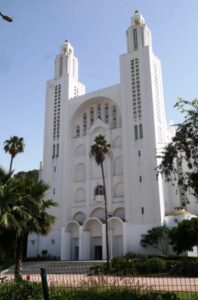
Within this huge park is the former Cathedral of the Sacred Heart. This large building in neo-Gothic style with Art Deco and Andalusian overtones, began construction in 1930. Its main building phase lasted through the 1930s, yet wasn’t finally completed until around 1952-53. It ceased its religious function in 1956 after the independence of Morocco. It was deconsecrated, and subsequently became a cultural centre, which is open to visitors, and regularly hosts various types of exhibitions and cultural events.
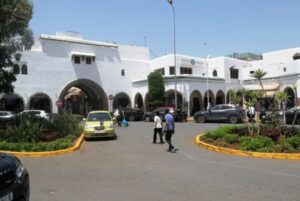
South east of the centre of Casablanca is the Quartier Habous, often referred to as the New Medina. The name ‘Habous’ refers to the religious assembly that allocated dwellings within a medina. Its development started in 1916, in the early stages of the French protectorate, as a measure to help solve a housing crisis, as the population outgrew the old medina. Its purpose was to house many traders and their families from other parts of Morocco that brought business to the growing city.
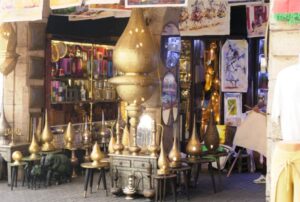
Today, it’s one of Casablanca’s most picturesque quarters, a charming mix of Moroccan and European architectural styles, with arches, small squares and gardens. There are souks, with traders selling clothing, jewellery, bookstalls, ceramics and spices, plus tea shops, cafes and restaurants, as well as a large, open bazaar amongst tree-lined squares and neat alleyways. It’s a great place to wander and explore.
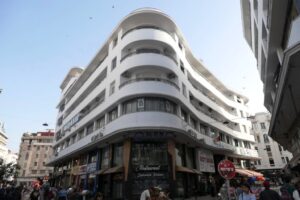
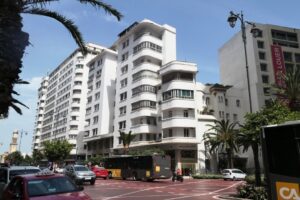
One of the main features of Casablanca is that it is a major global centre for Art Deco architecture, developed primarily during the French colonial rule in the 1920s and 1930s. It became a kind of architectural “laboratory”, blending European modernist geometry and streamlined curves with traditional Moroccan arts, Islamic arches and intricate tilework into a distinct style known as Mauresque or Neo-Moorish.
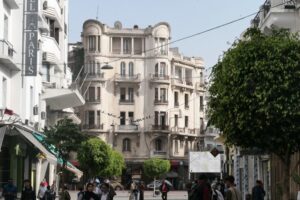
Key characteristics include curved corners instead of sharp, 90 degree angles; wrought iron details such as ornate, geometric ironwork on balconies, window grilles and staircases; motifs and bas-relief facades combining stylised European geometreic shapes with traditional floral and Berber patterns; lots of steep verticals, i.e., tall, vertical window bays and stepped rooflines, emphasising height and modernity.
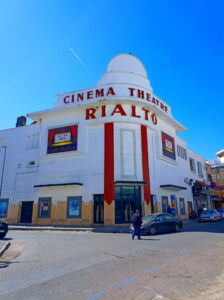
Some good examples of this style include the Cinema Rialto, built in 1930; the Post Office, constructed in 1918, which blended Neo-Moorish arches with early Art Deco structure; the Bank Al-Maghrib, which showcases a heavy mix of a monumental European frame and Moroccan craftsmanship, and the Immeuble Liberté (Liberty Building), a later 12-storey modernist landmark which represented the peak of urban vertical ambitions in the city centre.
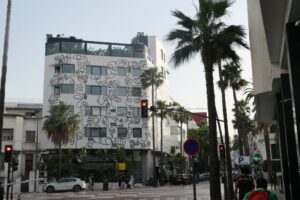
As we discovered, there’s a lot more of interest to discover and explore in Casablanca than we had thought. Like Tangiers, so much information about Casablanca is very out-of-date. Having said that, it’s not an especially picture-postcard city, and far too many spendid buildings need a good clean, a lick of paint, and some basic external repairs. Nevertheless, it is a very rewarding destination which has its own unique atmosphere and architecture, plus of course plenty of delicious Moroccan food to enjoy. So, here’s looking at you, Casablanca!
One of the joys of a Sunday afternoon … settling back to read your take on another city and region. So wish I could have been there with you.
Hi Anna,
Yes, like so much of Morocco, Casablanca is a very underrated city, with lots to explore and enjoy. So glad you enjoyed reading about it.
Cheers, Cheryl