

EL JADIDA & ESSAOUIRA–TWO COLOURFUL RESORT TOWNS ON MOROCCO’S ATLANTIC COAST
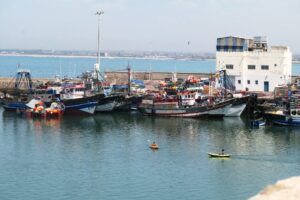
After a most enjoyable time in Casablanca, we drove south down the coast to El Jadida and Essaouira. The distance to El Jadida is 102 kms, taking around 1hr 15 mins., through pleasant if not spectacular countryside, observing how the landscape unfolds and opens out onto the Atlantic coastal town, with its small harbour and golden sand beaches. We were keen to visit this coastal town whose Portuguese origins date back to the 16th century, and declared a UNESCO World Heritage site in 2004. From El Jadida, 280 kms further south on the coast lies Essaouira, a popular resort town, renowned for its delicious fresh seafood, a calm, whitewashed, walled medina with a rich history, and a slow, relaxed pace. Europeans and Moroccans flock here in summer to enjoy its cooling sea breezes, wind-surfing and sandy beach. Essaouira was officially declared a UNESCO World Heritage Site in 2001.
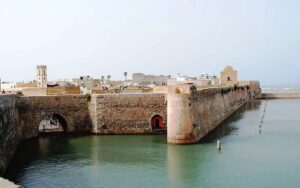
One very welcome surprise was discovering how good Moroccan roads are, right across the country. Again, we had been led to believe that the roads weren’t very good and often in need of repair. This is far from the case nowadays. A relaxing, easy drive for a little over an hour from Casablanca, the outskirts of El Jadida appear, then the massive old fortress walls right on the Atlantic seafront.
El Jadida traces its origins back to the 5th century BCE, when it was founded and settled by the Phoenicians, basically to be an anchorage used by traders. The Portuguese arrived in 1513 and built Mazagan (the original name of El Jadida) as a fortified trading port, which was part of the chain of Atlantic fortifications that gave Portugal control of the Atlantic trade routes in the early 16th century. It was to be their last stronghold, holding it until 1769, when the Alaouite Sultan Mohammed III expelled them. The Portuguese destroyed as much as they could before leaving, and what survived was the fortification itself and the enclosed medieval cistern in which they used to store water. Most of the Portuguese inhabitants were sent to the colony of Brazil, where they founded new colonies.
The town remained largely uninhabited, having been dubbed “al-Mahdouma” (‘The Ruined’). Eventually, Morocco’s Alaouite dynasty rebuilt the town within the Portuguese walls, and in 1821, Mazagan was re-named El Jadida by Sultan Abd el-Rahman, who ordered that a mosque be built, and the destroyed portions of the city rebuilt. The town developed into the interesting hybrid architectural space that UNESCO inscribed in 2004 as “an outstanding example of the interchange of human values, through the development of modern town plannng and architecture using Portuguese and Moroccan influences.”
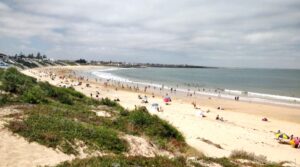
Beyond the UNESCO citation, El Jadida is simply a very pleasant Atlantic coastal town, with its long beach, good seafood restaurants, and the relaxed atmosphere of a place that still serves its local population, rather than simply catering for tourists.
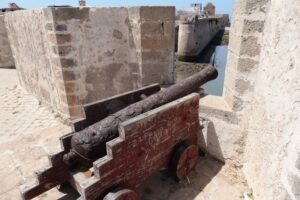
The design of the fortress of Mazagan was a response to the development of modern artillery in the Renaissance. It is star shaped with slightly inclined, massive walls, approx. 8m high, and 10m thick, enclosing a patrolling, peripheral walkway 2m wide. A walk along these ramparts is a great way to view the town. Nowadays, there are four bastions: the Angel, St Sebastian, St Antoine and the Holy Ghost Bastions. There was a fifth, the Governor’s Bastion at the main entrance, but this was destroyed by the Portuguese when they were expelled in 1769. It has been left as a ruin.
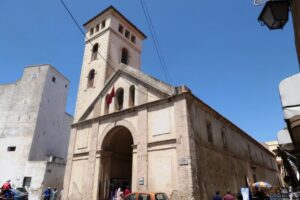
The fort has 3 gates, and the main entrance has a double arch in the centre, originally connected to land via a drawbridge. A 20m wide and 3m deep ditch, once filled with seawater, surrounded the fort. During the time of the French Protectorate, this ditch was filled in and a new entrance gate was opened, leading to the main street, the Rua da Carreira, and to the Seagate. Along this street the best preserved historic buildings, including the Catholic Church of the Assumption and the Portuguese cistern, are located.
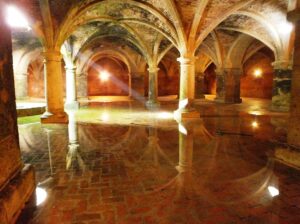
The semi-subterranean cistern is one of the main attractions in El Jadida. It’s roughly a square design, and was constructed with five rows of five stone pillars and columns. The chamber was built in a late Gothic style known as Manueline, with a vaulted ceiling of brick masonry and stone ribs. Its original function is not clear, and it’s thought to have possibly been a barracks, an armory or a granary. It was converted into a cistern in 1541. There’s a round opening in the centre of the chamber that serves to collect rainwater. It’s famous especially for the thin layer of water that covers the floor and creates fine and ever-changing reflections in the otherwise dark, vaulted chamber. Because of these qualities, several movies have been filmed within this cavernous space, with perhaps ‘Othello’ by Orson Welles being the best known internationally.
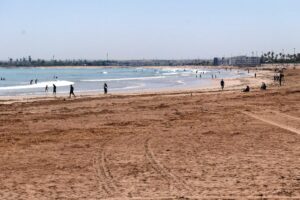
After exploring the ancient town on foot, most people head to the beach to relax and take a swim. You can rent a sunlounge or parasol, and there’s a good range of facilities nearby including beachfront cafes, shops and showers. Needless to day, the beach can get very crowded in summer, and if you prefer a quieter strech of sand, head northwast of the town to El Haouzia Beach, where a partially submerged wreck is visible just offshore.
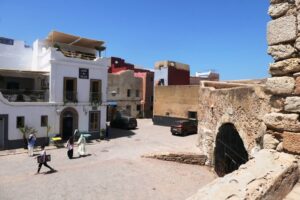
In town, there are restaurants to suite every taste and budget. The most luxurious being Le Privé, a fine dining restaurant specialising in French and Mediterranean cuisine. Of course, there are a number of good places offering authentic Moroccan cuisine, including tagines, throughout the city, as well as excellent local fish available from inexpensive cafes near the Central Market, but for somewhere special, book a table at Mazagan Beach resort’s Sel de Mer.
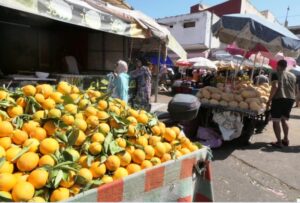
The town’s markets are mainly geared towards local Moroccans, and are in many ways more authentic than the tourist souks of Fez or Marrakesh. At the Old Market, located across the street from the Fortress of Mazagan, you will find fruit and vegetables, meat and seafood, clothing and household goods all separated into distinct sections.
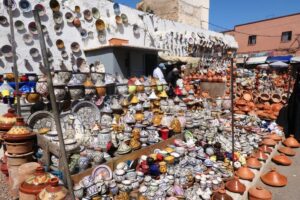
The Central Market mostly sells ingredients, but has some souvenirs including fine lamps and traditional tea sets. You will also find beautiful ceramics such as plates, bowls and tagine pots from Safi, Morocco’s pottery capital.
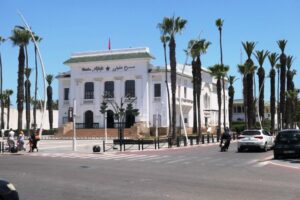
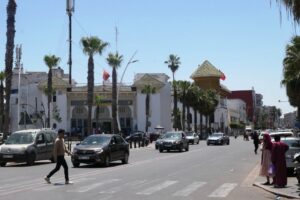
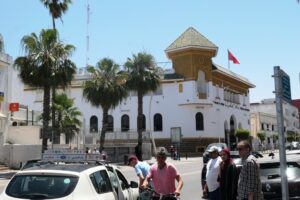
The French influence in the town is clearly recognisable by a group of fine, 1930s administrative buildings. These include a post office, theatre and several administrative buildings, one of which is now a museum, celebrating the Moroccan resistance to French colonialism.
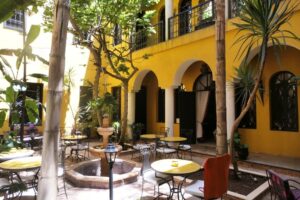
After a few most enjoyable days in El Jadida, we drove south along the coast to Essaouria. Morocco’s Atlantic coastline is known for its walled medinas and long sandy beaches, that are a great drawcard for locals and visitors, mostly Europeans, throughout the summer season. Europeans also like to escape here for the mild climate during harsh European winters.
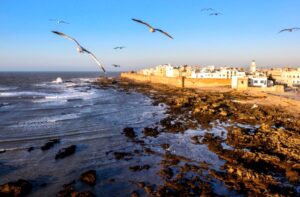
There is always a light coastal breeze, referred to as the alizee, or taros in the local Berber language. It’s easy to understand why Essaouria is often referred to as the windy capital of Africa. Consequently, the beaches sometimes seem more suitable for sandblasting than for sunbaking, but are highly popular with windsurfers and kitesurfers between April and November. You will also find horse or camel riding available along the long stretch of beach.
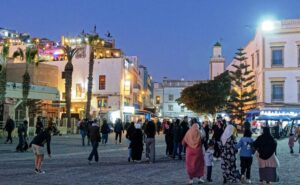
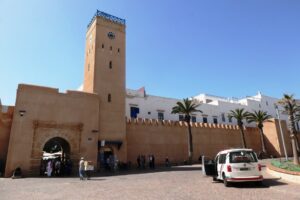
At any time of year, Essaouria gets its fair share of local and international visitors, when they come to wander through the palm-lined avenues and spice-scened lanes of the fortified medina, also filled with beautiful Moroccan arts and crafts.
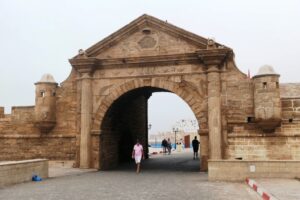
This seaside town was formerly called Mogador until the 1960s, a word that originates from the Phoenician word “Migdol” meaning a “small fortress.” Its foundation was the work of the Moroccan Alawid sultan Mohammed bin Abdallah, who entrusted it to several architects in 1760, in particular Theodore Cornut and Ahmed al-Inglizi, who designed the town using French captives from the failed French expedition to Larache in 1765. The aim was to built a city adapted to the needs of foreign merchants. Once built, it continued to grow, and experienced a golden age and exceptional development, and became the country’s most important commercial port, and also its diplomatic capital between the end of the 18th and early 19th centuries.
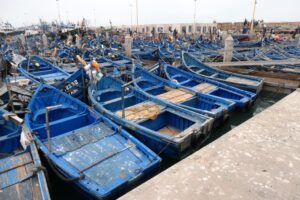
Archaeological excavations show that Essaouira has been occupied since prehistoric times. The bay of Essaouira is partially sheltered by the island of Mogador, which made it a peaceful harbour protected against strong marine winds. It has long been considered one of the best anchorages along the Moroccan coast. The Carthaginian navigator Hanno visited in the 5th century BCE and established a trading post called Arambys.
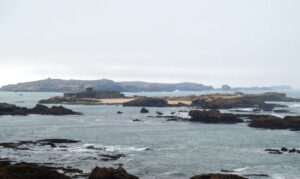
Around the end of the 1st century BCE, the Berber king of Mauretania, Juba II established a Tyrian purple factory, processing the murex and purpura shells found in the inter-tidal rocks at Essaouira and the Iles Purpuraires. This precious dye coloured the purple stripe in the togas worn by the Senators of Imperial Rome.
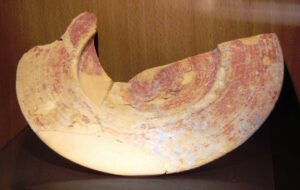
A Roman villa was excavated on Mogador island, and a Roman vase was found as well as coinage from the 3rd century CE, along with other artefacts, which are on display in the Sidi Mohammed ben Abdallah Museum and the Archaeological Museum in Morocco’s capital city, Rabat.
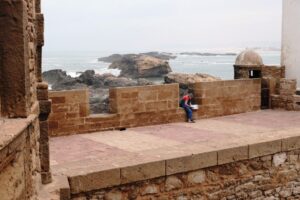 During the Middle Ages, a Muslim saint named Sidi Mogdoul was buried in Essaouira, no doubt giving its origin to the name “Magador”. In 1506, the king of Portugal, Manuel l, ordered a fortress to be built there, named Castelo Real de Magador. Altogether, it has been recorded that the Portuguese seized six Moroccan towns and built six stand-alone fortresses along the Moroccan Atlantic coast. Four didn’t last long and two became permanent settlements. The fortress of Castelo Real of Mogador fell to the local resistance movement, the Regraga fraternity, four years after its establishment, in 1510.
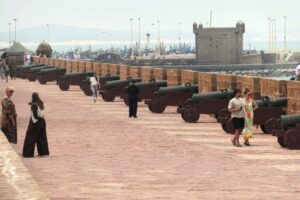
In the 16th century, Spain, England, the Netherlands and France tried in vain to conquer the locality. Essaouira remained a haven for the export of sugar and molasses, and as an anchorage for pirates. After various expeditions by the French during the 17th century, a treaty was signed giving France preferential treament, known as “capitulations”, which meant preferential tariffs, the establishment of a Consulate, and freedom of religion for French subjects.
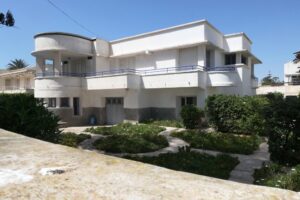
From 1912 to 1956, Essaouira was part of the French protectorate of Morocco, and was used as a base for French troops. France had an important administrative, military and economic presence. Essaouira had a Franco-Moroccan school, still visible today in Derb Dharb Street, and many Moroccans of Essaouira speak French fluently today. At the beginning of the late 1960s, Essaouira became something of a hippie hangout, and has attracted free spirits, artists and musicians ever since.
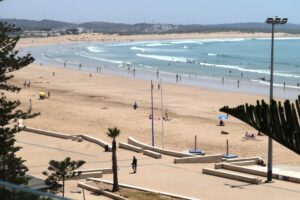
In the early 1950s, film director and actor Orson Welles stayed in a hotel just south of the town walls during the filming of his 1952 adaptation of ‘Othello’. The fortified harbour was used a a location in the 3rd season of the TV series Game of Thrones, representing Astapor. The beach at Essaouira was used as a location in Christopher Nolan’s latest movie ‘The Odyssey’ to film the scene of the discovery of the Trojan Horse.
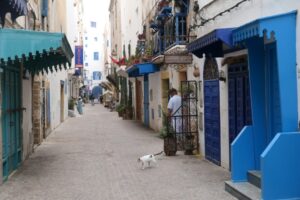
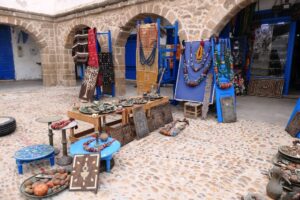
Part of the enjoyment of Essaouira, like most other Moroccan towns, is wandering through the medina. Essaouira has lots of small, individual art galleries, as well as the expected rug dealers, spices, pottery, and of course, lots of freshly caught seafood. Locals mix with visitors, and there seemed to be less pressure to buy from the stallholders and shopkeepers than a lot of other destinations.
After a few days of slowing down a little, relaxing and enjoying the coastal environment of both El Jadida and Essaouira, it was time to head off again on the next leg of our Moroccan adventure.
Cheryl, I so love the way you make these places come alive. The combination of photos and your words makes me feel I am there with you.
Dear Anna,
Thank you for your warm words–much appreciated. What you’ve said is exactly what I try to convey! It certainly helps when I’m talking about such an interesting destination! Thanks again, Cheryl